A Clear Step-by-Step Guide for Families Who Need Help Fast
If you need to bail someone out in Livingston Parish, your first step is to contact QRF Bail Bonds and provide the name of the incarcerated person. We will verify the charges, bond amounts, and any restrictions and/or bond conditions.
Once we verify this information, the total cost of the bond will be provided, and terms will be discussed and will correlate with the secure application sent to you for electronic completion. The application is reviewed, payment is made, and then the incarcerated individual is released.
Louisiana generally allows bail before trial, but timing can vary based on the charge, the court, and jail processing.
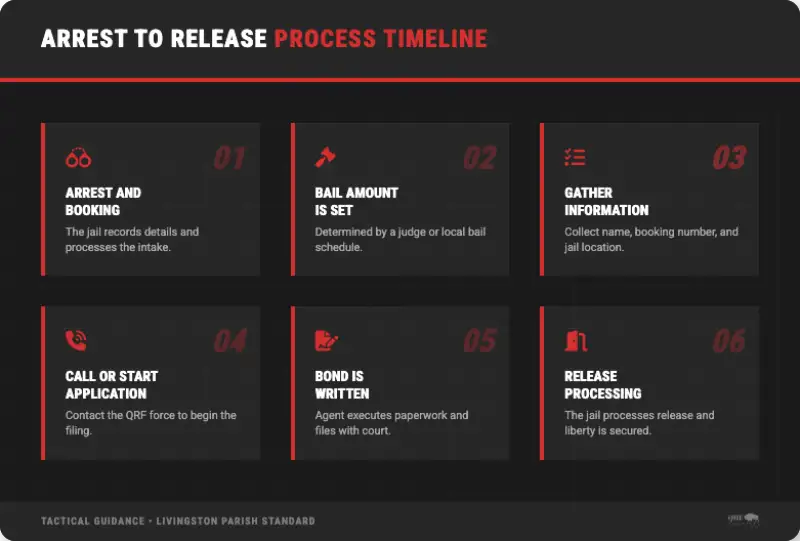
Simple 3-Step Process
- Step 1.) Call QRF Bail Bonds
- Step 2.) Complete Electronic Application and Payment. (10 – 15 minutes)
- Step 3.) Defendant is released!
When a loved one is arrested in Livingston Parish, most families are not looking for a lecture. They want to know what happens next, how much time this may take, and who can explain the process clearly. That is exactly where a local, education-first bail bond page should help, instead of making the moment more stressful.
Need help now: Start the application here. If you need to talk first, use the Call Now button next to this section.
What Happens First After an Arrest in Livingston Parish
The first step is booking. That usually means the jail records the person’s information, processes the arrest, and holds them while the court or scheduling determines bail. In Louisiana, people are generally bailable before and during trial, but there are exceptions, and some charges can require a contradictory bail hearing before bail is set.
For families, that means two people arrested on different charges may not move through the system the same way. One person may have a bail amount available quickly. Another may have to wait for a hearing or additional review. The Livingston Parish Sheriff’s Office provides an official inmate list and detention center information to help you start at the right location.
For most people, this is the most stressful time they have gone through; for us, we do this every day. One call to QRF Bail Bonds ensures that the right agency is in your corner to help you navigate the process effectively and as stress-free as possible.
Step 1: Find Out Where the Person Is Being Held
Before you can do anything else, confirm the person’s location. Families often lose time because they are working from second-hand information or an incomplete name. Start with official sources so you are not guessing.
Use the official Livingston Parish Sheriff’s Office inmate list and detention center resources first. If you want custody status updates, the Livingston LAVNS page is also available.
| What To Check | Why It Matters |
| Full legal name | Helps confirm you have the right person |
| Jail or detention center | Tells you where the person is being processed |
| Booking number if available | Makes follow-up faster |
| Custody status | Shows if the person is still being held |
The goal here is not to collect every detail on earth. The goal is to confirm the location and status so you can move to the next step with less confusion.
Once you know where the person is, the next question is the one every family asks: has bail been set yet?
Step 2: Find Out If Bail Has Been Set
This is where timing starts to matter. In some cases, a bail amount may be available through an established schedule. In others, a judge may need to review the case first. Louisiana law includes rules on bail hearings, bail schedules, and the factors used in fixing bail.
That matters because families often think a delay means something is wrong. Sometimes it just means the process is still moving. In certain domestic violence or other qualifying cases, a contradictory bail hearing may happen before bail is set. Gwen’s Law is one of the main reasons this can take longer in specific cases.
| Status | What It Usually Means |
| Bail is already set | You may be able to start the bond process right away |
| Bail is pending | The court or schedule has not finalized the amount yet |
| Hearing required | The charge may require judicial review before bail is fixed |
If bail is not set yet, do not assume there is nothing you can do. It is still smart to talk with QRF Bail Bonds so you know what information to gather and what the next move will be once the amount is available.
Once bail is set, the smartest thing you can do is have the basic information ready before you call or apply.
Step 3: Gather the Information You Will Need
Most families are not unprepared because they do not care. They are unprepared because this is a stressful moment, and they have never dealt with it before. A short checklist helps more than a long legal speech.
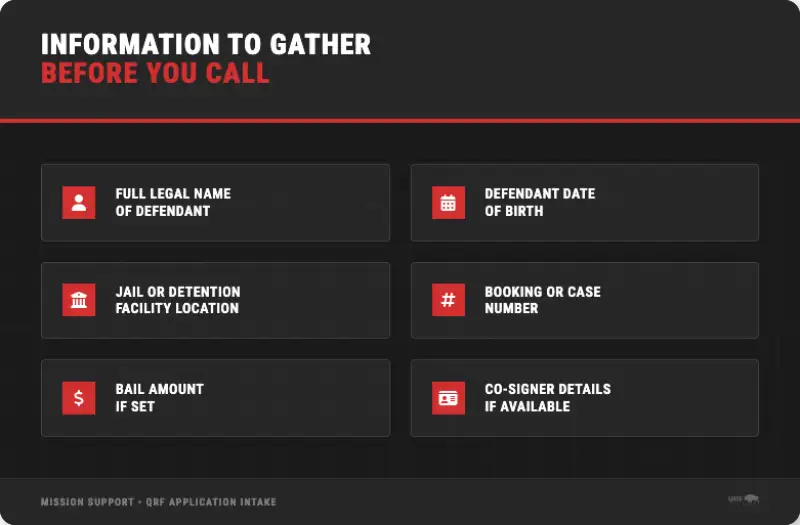
Try to gather as much of this as you can:
- Defendant’s full legal name
- Date of birth if known
- Where the person is being held
- Booking number if available
- Bail amount if available
- Your name and relationship to the defendant
- Your phone number and email
- Questions about payment or co-signer responsibilities
You do not need to panic if you do not have every detail. You just need enough information to start the conversation clearly. The faster the facts are confirmed, the easier it is to explain the next step.
After that, the biggest question usually shifts from paperwork to cost.
Step 4: Understand How a Bail Bond Works in Louisiana
Louisiana law generally protects the right to bail before and during trial, subject to exceptions. A bail bond is one way to meet that requirement when the full cash amount is not being posted directly by the family. Louisiana law also sets the standard premium rate for commercial surety criminal bail bonds at 12% of the face amount of the bond, or $120, whichever is greater, except where another law applies.
That is one of the most useful facts in this whole process because it helps families understand that cost is tied to a legal framework. It is not just random pricing pulled from thin air.
| Option | What It Means | What Families Usually Care About |
| Cash bail | The full bail amount is posted directly | Requires more cash up front |
| Commercial surety bond | A licensed bail bond is used to secure release | Common option when full cash bail is not practical |
Once families understand the basics, the next question becomes how the paperwork and release process actually moves forward.
Step 5: Sign the Paperwork and Start the Release Process
After bail is set and the bond process begins, there is still paperwork to complete. That may include application details, contact information, and co-signer or indemnitor information if needed. Louisiana law recognizes electronic bonds, and electronic bond execution may be available in parishes where the sheriff has approved software and the bond is handled by an approved agent.
This is where process clarity matters. Starting the application early can save time, but it does not mean the jail releases someone the second you press submit. The paperwork starts the process. Jail processing still has to happen after that.
Even after the bond is handled, there is still one more part that people underestimate: release timing inside the jail.
Step 6: Wait for Jail Processing and Release
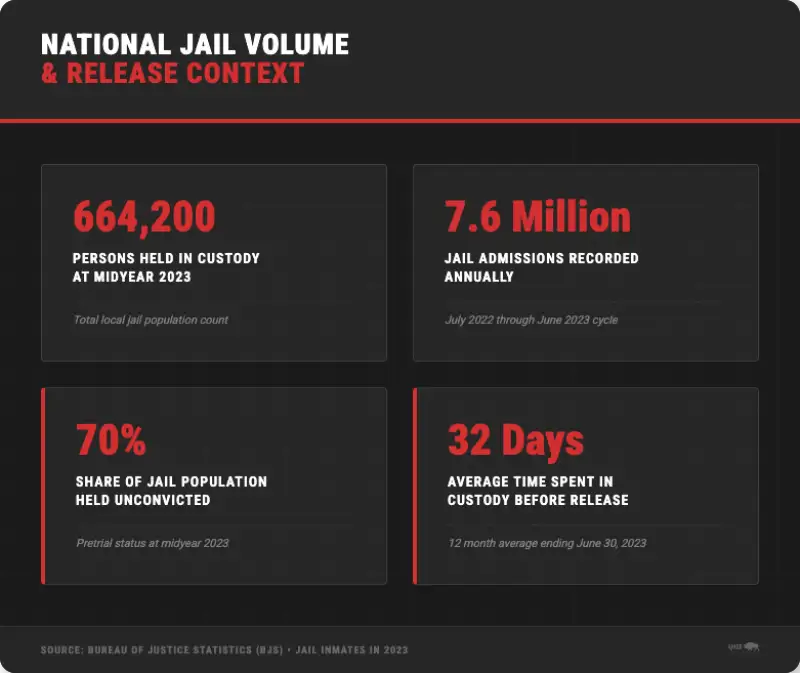
Release is not always immediate. Even after bail is posted, the jail still has to process the release, confirm paperwork, and clear any other administrative issues. National jail data helps explain why delays happen. Local jails handle a constant flow of intake and release, so families should expect some waiting even after the bond process is complete.
| What Speeds Things Up | What Can Slow Things Down |
| Correct booking details | Wrong or incomplete information |
| Bail amount already set | Pending hearing or review |
| Fast application completion | Administrative jail processing delays |
| Clear co-signer information | Additional holds or warrants |
The most honest approach is this: QRF can help move the bond process forward, but no ethical agency should promise a release time it cannot control.
That leads to the next issue families need to understand: what can delay release even when everyone is trying to move fast.
What Can Delay Someone’s Release
Any good bail page should tell the truth here. People under stress can handle a realistic answer better than a fake promise. Several things can slow the release even after you have started the process.
- Bail has not been set yet
- A contradictory hearing is required
- The defendant has another hold or warrant
- Jail staff are still processing the release
- Information provided to the jail is incomplete
- Conditions of release need to be entered or reviewed
Once the person is released, the process is not over. It just enters the next stage.
What Happens After Release
Release does not end the case. Court dates still matter. Bail conditions still matter. Louisiana law allows courts to impose conditions of bail, and failing to follow those conditions can create bigger problems later.
Families should treat the release as the point at which the next responsibilities begin. Keep track of court dates. Keep paperwork organized. Ask questions early if something is unclear. A calm, professional bail bond company should help people understand that release is part of a process, not the finish line.
That is also why local guidance can matter more than people realize when time and clarity are both in short supply.
Why Families in Walker and Livingston Parish Choose Local Bail Bond Help
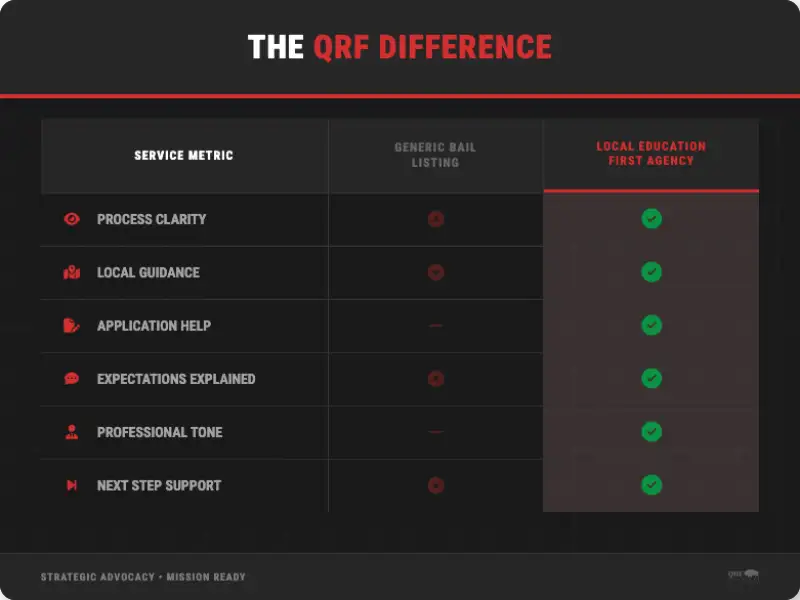
When people are searching in a crisis, they are not just comparing prices. They are listening for clarity. QRF’s positioning is built around professionalism, ethics, local knowledge, and public education for families trying to understand what happens next. We are based in Walker, and articles like this one serve as a resource hub for questions about the bail process, rights, timelines, and local court and jail information.
This matters because parish-specific process questions can feel small until you are the one trying to get answers fast. A local agency can explain what information matters, what to expect, and what the next practical step looks like without adding more pressure to the moment.
Talk to QRF Bail Bonds: If you are trying to help someone in Livingston Parish, use the Call Now button or Start Application today. Clear help beats guessing.
Frequently Asked Questions About How to Bail Someone Out in Livingston Parish
These are the questions families usually ask once they know the basic process.
How do I find someone in the Livingston Parish jail?
Start with the official Livingston Parish Sheriff’s Office inmate list. You can also use Livingston LAVNS to monitor changes in custody status. Use the person’s full legal name and booking details if you have them.
How long does it take to get someone out after bail is posted?
There is no honest one-size-fits-all answer. It depends on when bail is set, jail processing, paperwork accuracy, and any other holds or issues. Even after a bond is handled, release processing can still take time.
Do I have to pay the full bail amount in Louisiana?
Not always. A commercial surety bond is one common option. Louisiana law sets the standard premium rate for commercial surety criminal bail bonds at twelve percent of the bond amount or one hundred twenty dollars, whichever is greater, except where another law applies.
What if bail has not been set yet?
That can happen for several reasons. Some cases move through a schedule quickly, while others may need judicial review or a contradictory hearing first. You can still gather information and talk through the next step before the amount is posted.
Can a bail bond be handled electronically in Louisiana?
Louisiana law recognizes electronic bonds, and electronic execution may be permitted when the sheriff has approved the software and the bond is handled by an approved agent. Availability depends on the parish process and approved systems in place.
What information should I have before I call?
Try to have the defendant’s full name, where they are being held, the bail amount if known, your contact details, and any booking information you can find. If you do not have all the details yet, start with what you know and confirm the rest as you go.