

When someone is arrested in Livingston Parish, the process that follows can feel stressful and unfamiliar. Our agency works with families every day and understands how important it is to have clear information. This guide walks through each step of the bail process so you know what to expect from the moment bail is set to the defendant’s release and court compliance.
Step 1: The Court Sets Bail
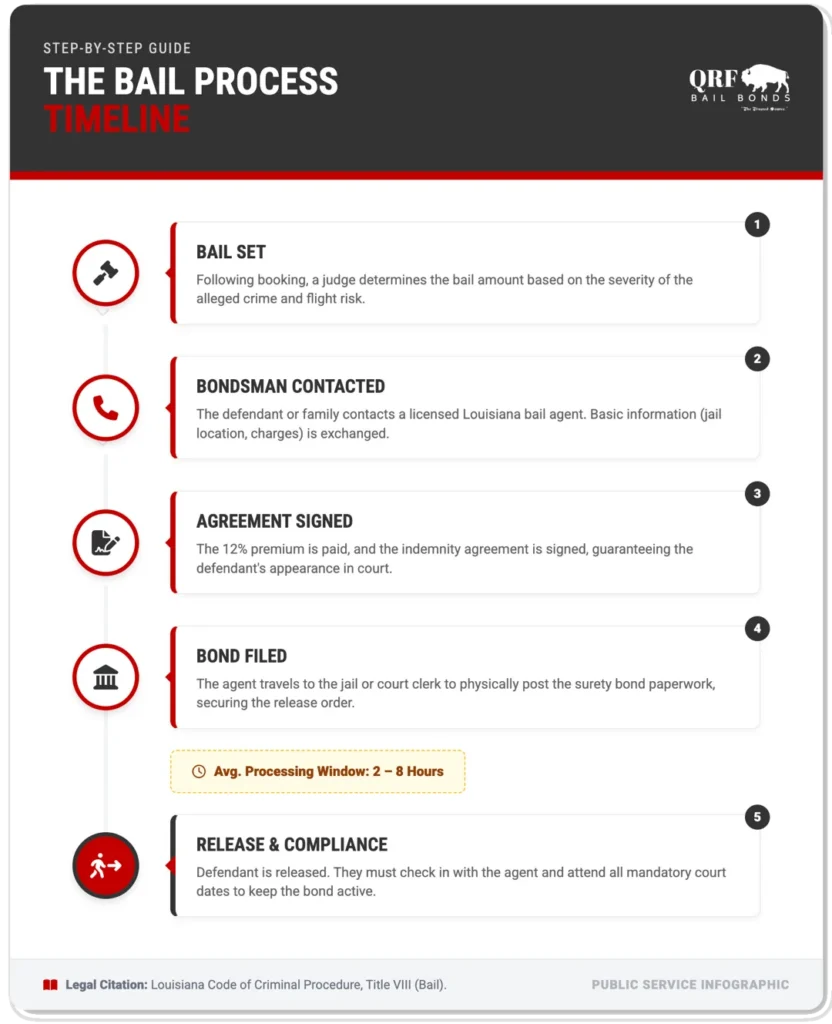
After the booking is completed, the next major step is the judge’s bail decision. The court reviews several factors, including the seriousness of the charge, the defendant’s background, the strength of the evidence, community ties, and whether releasing the defendant would pose a risk. Louisiana law provides the framework for these decisions in the Code of Criminal Procedure Article 316, which requires the court to consider public safety and likelihood of appearance (Article 316).
Certain offenses may require additional review or limit release options under Article 313, such as cases involving violence or protective orders (Article 313). Once bail is set, you can begin working with a licensed bondsman if you are not able to post full cash bail.
Step 2: Contacting a Licensed Bondsman
Families who cannot pay the full cash bail typically turn to a licensed bail agency for help. When you contact our office, we request information such as the defendant’s name, booking number if available, the charge, and the bail amount. With those details, we begin preparing the bond immediately, whether over the phone or through online forms.
Louisiana law sets the premium for a commercial bail bond at a regulated rate. Under Revised Statutes Section 22:1443, the premium is up to 12 percent of the bail amount and is nonrefundable once paid (RS 22:1443). After you agree to proceed, we move to the documentation and approval stage so the bond can be filed with the detention facility.
Step 3: Paying the Premium and Signing the Agreement
At this point, the co‑signer signs the agreement that makes the bond possible. The co‑signer is responsible for ensuring the defendant attends court and may also provide collateral depending on the circumstances. This step includes confirming identity, reviewing payment arrangements, and completing legally required documents.
The premium you pay is the service fee that allows our agency to post the bond. Louisiana’s regulatory requirements make clear that this fee is not refunded, even if the defendant’s case is dismissed at a later stage. Once all forms are correctly signed and processed, we prepare the bond for filing with the jail.
Step 4: Posting the Bond and Release
After the bond is filed, the detention center verifies the documents and begins releasing the defendant. Many releases occur within two to eight hours, but the timing depends on current staffing levels, how busy intake and processing are, and whether any additional holds appear in the defendant’s record.
Our agency monitors each case as it moves through this stage to keep families informed. We also help address delays when possible by communicating with the facility to ensure the file continues moving forward.
Step 5: Staying Compliant After Release
Once released, the defendant must follow every court instruction. Missing a court date or violating a condition can lead to a warrant, additional penalties, and bond revocation. Louisiana law outlines the discharge and obligations of bail under Article 331, including the responsibilities of both the defendant and the surety (Article 331).
Our team stays available to answer questions and provide guidance, and we can explain what to do if a date needs clarification or if the family receives unfamiliar paperwork.
Cost, Bond Options, and Expected Timeline
Understanding how costs, bond types, and timelines work helps families avoid surprises and choose the option that best fits their situation.
Cost
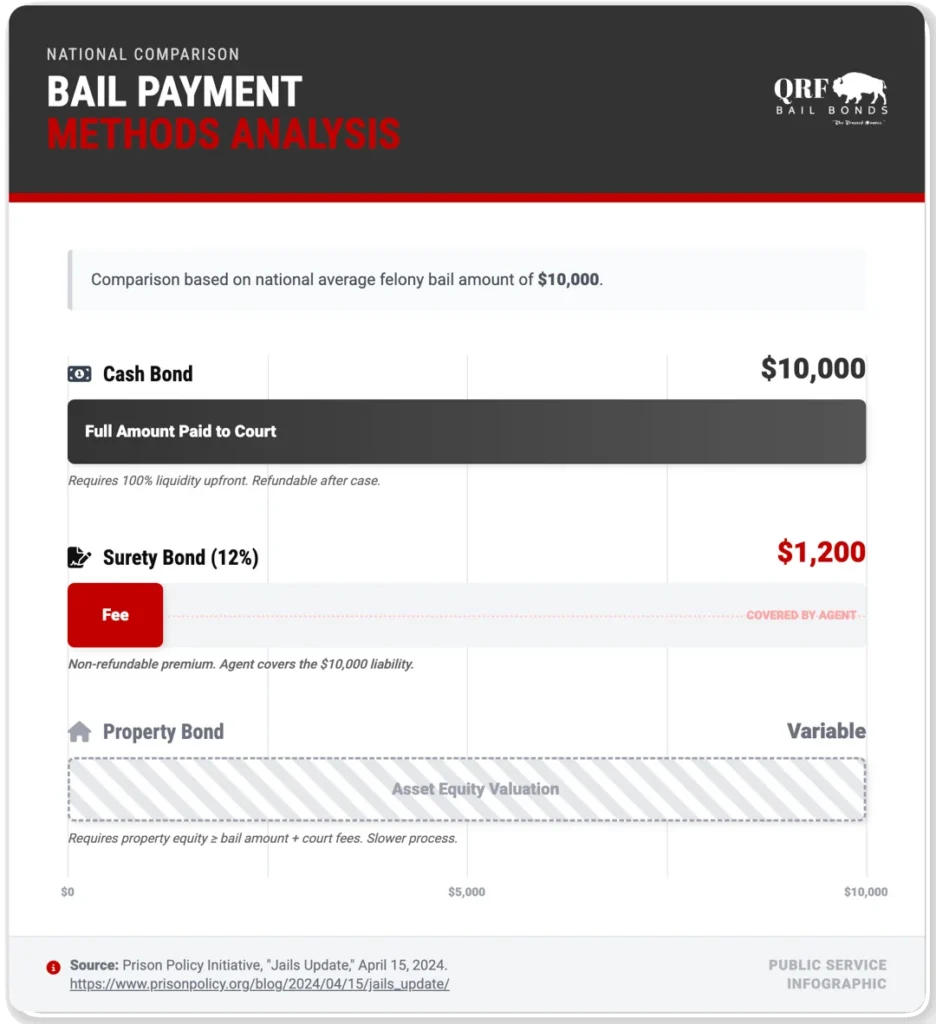
The premium for a commercial surety bond is set by law and typically ranges from 0 to 12 percent of the full bail amount. This premium is the fee for posting the bond. Cash bail is an alternative, but many families find it difficult to cover the full amount, which is why the surety option is commonly used.
Bond Types
Louisiana recognizes several forms of bail, outlined in Code of Criminal Procedure Article 321 (Article 321). The main types include:
- Cash Bond: Paying the full amount directly to the jail or court.
- Commercial Surety Bond: A licensed agency posts the full amount in exchange for the premium and any required collateral.
- Property Bond: Real estate or another approved asset is used to secure the bond.
Expected Timeline
Most releases occur within 2 to 8 hours of the bond being filed, though times can vary. Factors such as shift schedules, weekend volume, or unexpected record checks may lengthen the process. Our agency stays in contact with the facility to help families know what to expect.
What Families Should Prepare Before Calling
Being ready with a few key pieces of information helps the process move faster. You will want:
- Photo identification for the co‑signer
- The defendant’s full name and booking number, if known
- Any available information about the charge
- Payment method for the premium
- Potential collateral information if requested
Frequently Asked Questions from Families
Families going through this process often share the same concerns. These answers help you move forward with a better understanding of what to expect.
How is the bail amount determined?
The judge reviews multiple factors under the criteria in Article 316, including risk of flight, prior record, and community safety (Article 316).
Can we pay cash instead of using a bondsman?
Yes. A cash bond is always an option. Many families choose a surety bond because paying the whole amount up front can be financially challenging.
What does the bond cost, and is it refundable?
The premium is typically up to 12 percent of the full bail amount under Section 22:1443 (RS 22:1443). This fee is not refunded under Louisiana law.
What happens if the defendant misses a court date?
The court may issue a warrant, revoke the bond, and hold the co‑signer responsible for the full bail amount and any related costs.
How fast can we get started?
Our agency is available around the clock. Once you provide the defendant’s details, we begin the bond process immediately and continue assisting until the defendant is released.
Get Started Now
Don’t let your loved one spend another minute in jail. Our agents are standing by 24/7 to help you through the process fast.